Thoughtful perspectives on liVING, career decisions, and wealth building.

Which IT Roles Are Most Future-Proof in the Age of AI?
Will AI replace my IT job? Will my salary drop or role disappear because of AI? Is my IT career safe from AI? Will automation reduce salaries or eliminate roles?Am I in the wrong IT role as AI grows? Will my skills become useless because of AI? Learn which IT roles are most future-proof and how professionals can survive and grow income in an AI-driven future.
FUTURE OF WORK, AI & MONEY
1/17/20263 min read

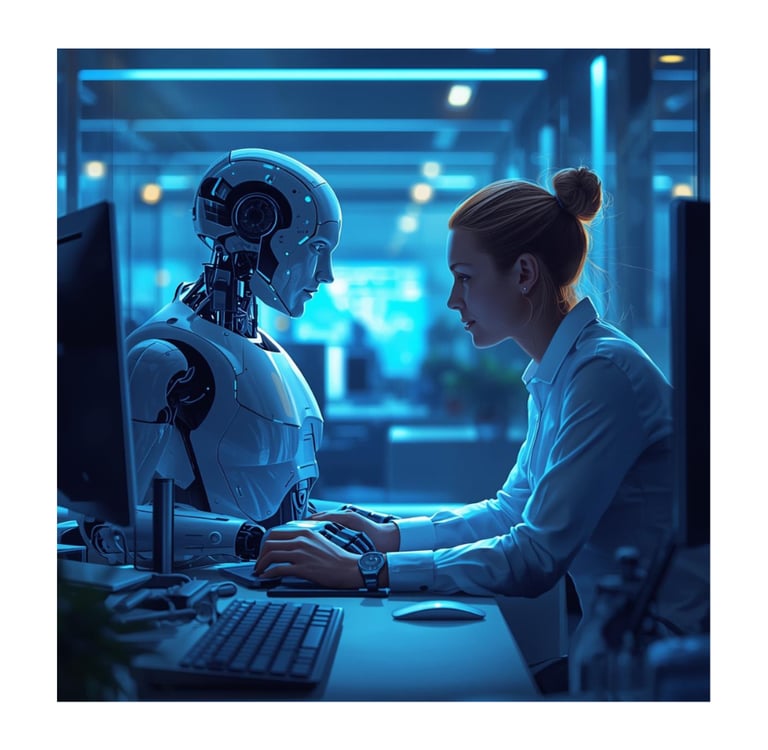
Artificial intelligence is no longer a distant disruption for IT professionals—it is already reshaping how software is built, deployed, maintained, and monetized. As automation accelerates, many professionals are asking a critical question: which IT roles will still be relevant, resilient, and well-paid in the next decade?
This article breaks down which IT roles are most future-proof, why certain roles remain resilient despite AI, and how professionals can align career choices with long-term income stability in an AI-driven economy.
Why “Future-Proof” Matters More Than Job Titles
The biggest mistake professionals make when thinking about AI is focusing on job titles instead of job leverage.
AI does not replace entire professions overnight. It replaces:
Repetitive tasks
Predictable workflows
Low-context decision making
Roles that combine technical expertise with judgment, system thinking, and accountability tend to survive—and often become more valuable.
Understanding this distinction is central to navigating careers in the broader context of Future of Work, AI & Money, where income security increasingly depends on adaptability rather than tenure.
IT Roles That are Most Likely to Remain Relevant Long-Term
1. AI-Augmented Software Engineers
Despite fears, software engineering is not disappearing. Instead, the nature of the role is changing.
Future-proof engineers:
Design system architecture rather than just writing code
Integrate AI tools into workflows
Review, optimize, and secure AI-generated code
Long-tail search relevance:
how software engineers can stay relevant with AI
future of software engineering jobs
will AI replace programmers
Engineers who understand both business context and technical trade-offs are significantly harder to automate.
2. Cloud, Platform, and Infrastructure Architects
As systems grow more complex, someone must own:
Reliability
Scalability
Security
Cost optimization
AI can suggest configurations, but responsibility for system failures still lies with humans.
Future-proof infrastructure roles include:
Cloud solution architects
Platform engineers
DevOps leaders with governance expertise
These roles align directly with long-term enterprise risk and remain resilient even as automation increases.
3. Cybersecurity and Risk Professionals
Security is one of the least automatable areas of IT.
Why?
Attack patterns evolve unpredictably
Threat actors adapt quickly
Accountability cannot be delegated to machines
AI increases both offensive and defensive capabilities, but humans still make final decisions.
High-intent search themes:
cybersecurity jobs future proof
AI impact on cybersecurity careers
is cybersecurity safe from automation
Security professionals who understand AI-driven threats are positioned for long-term income stability.
4. Data Engineers and Analytics Translators
While AI can analyze data, it cannot define:
What data matters
How it should be structured
What decisions should be driven by insights
Future-proof data roles focus on:
Data pipelines
Governance
Business interpretation
Professionals who translate raw data into strategic decisions retain leverage that automation cannot replace.
5. Product-Focused Technical Roles
Roles that sit between technology and decision-making are especially resilient.
These include:
Technical product managers
Solution consultants
Systems analysts with domain expertise
Why these roles last:
They balance competing priorities
They manage trade-offs
They align technology with real outcomes
AI supports these roles, but cannot replace responsibility for impact.
Roles at Higher Risk of Automation
While no role disappears instantly, some are more exposed over time:
Manual QA testing
Low-complexity support roles
Repetitive scripting without system ownership
This does not mean immediate job loss—but it does mean slower income growth unless skills evolve.
Professionals in these roles benefit most from proactive planning within the broader framework of Future of Work, AI & Money, where career relevance and financial resilience must be addressed together.
Why Future-Proof Roles Earn More Over Time
Future-proof roles share common income characteristics:
Scarcity of skill
High cost of failure
Decision accountability
Business impact visibility
These factors protect compensation even when automation increases productivity.
This is why some professionals see income growth alongside AI adoption, while others experience wage pressure.
How IT Professionals Can Make Their Role More Future-Proof
Career security is not about choosing the “right” role once—it is about continuously upgrading leverage.
Practical strategies:
Move closer to system ownership
Develop cross-functional understanding
Learn how AI tools enhance productivity, not replace judgment
Build financial buffers for transition periods
Technical relevance alone is no longer enough. Financial planning and career planning must evolve together.
The Bigger Picture: Careers and Money Are Now Linked
AI has blurred the line between career strategy and financial planning.
Professionals who rely only on job stability are exposed.
Those who align:
Skill relevance
Income diversification
Long-term financial structure
are better positioned for calm, optional career decisions.
This is why understanding future-proof roles fits directly into the broader discussion of Future of Work, AI & Money, where the goal is not just employability—but sustainable wealth and choice.
Final Thought
The most future-proof IT roles are not defined by tools or programming languages.
They are defined by:
Accountability
Judgment
System ownership
Business relevance
AI will continue to change how work is done—but professionals who evolve alongside it can turn disruption into long-term advantage rather than risk.
The future belongs not to those who resist AI—but to those who use it to amplify their value.
Connect
Questions? Reach out anytime, we're here.
lifeworkwealth@gmail.com
© 2026 Life Work Wealth.
All rights reserved.All content published on this website is for informational and educational purposes only. No part of this website may be reproduced, distributed, or transmitted in any form or by any means without prior written permission, except where permitted by law.