Thoughtful perspectives on liVING, career decisions, and wealth building.
How AI is Changing Income Stability for Doctors and Healthcare Professionals
Can AI replace doctors, nurses, or caregivers? Are Healthcare jobs still secured in the age of AI? Discover how AI is reshaping healthcare income stability and what professionals must do now.
FUTURE OF WORK, AI & MONEY
1/21/20264 min read


Healthcare has always been considered one of the most stable professions in the world. Doctors, nurses, and caregivers have long believed that their skills could never be replaced, outsourced, or automated. For decades, that belief was mostly true.
But today, a new question is quietly spreading across the medical community: Can AI impact healthcare professionals—and if yes, how will it affect income stability?
This article explores how artificial intelligence is reshaping earnings, job security, and long-term financial predictability for doctors, nurses, and healthcare workers—and what professionals must do now to stay financially resilient.
Why Healthcare Income Was Considered “Safe” for Decades
Traditionally, healthcare income stability rested on three pillars:
Human judgment was irreplaceable
Demand always exceeded supply
Experience increased earning power
Whether you were a physician, nurse, technician, or caregiver, your income generally followed a predictable trajectory: education → experience → seniority → stability.
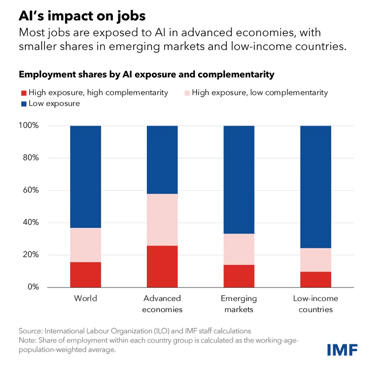
AI is not destroying healthcare—but it is changing how value is measured.
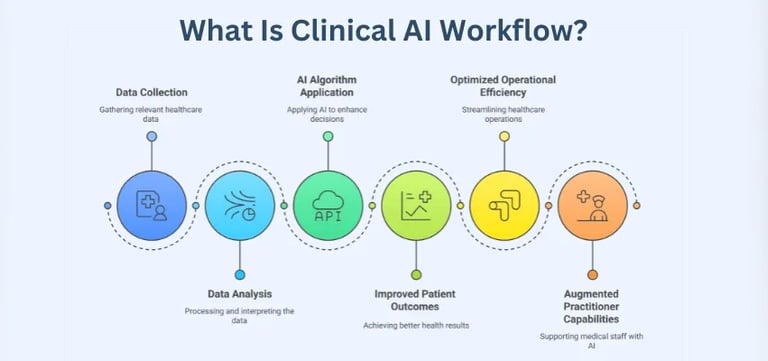
How AI Is Entering Healthcare (And Why That Matters for Income)
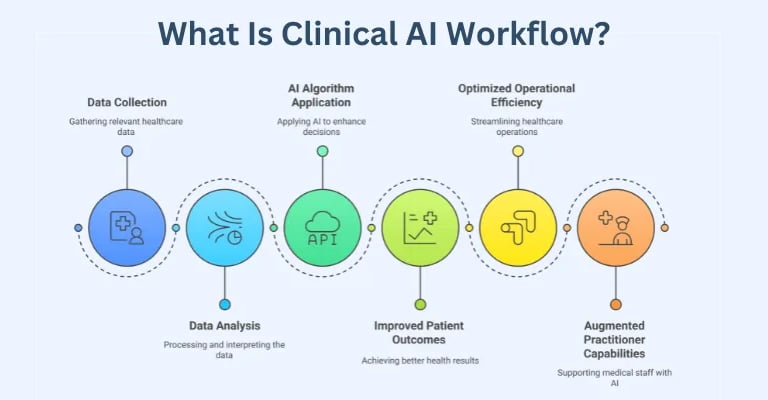
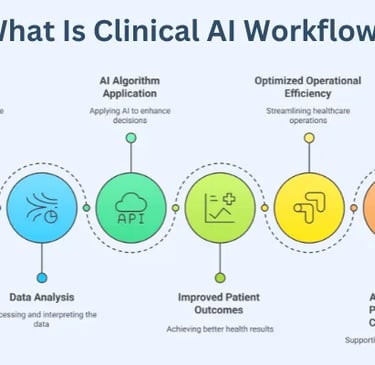
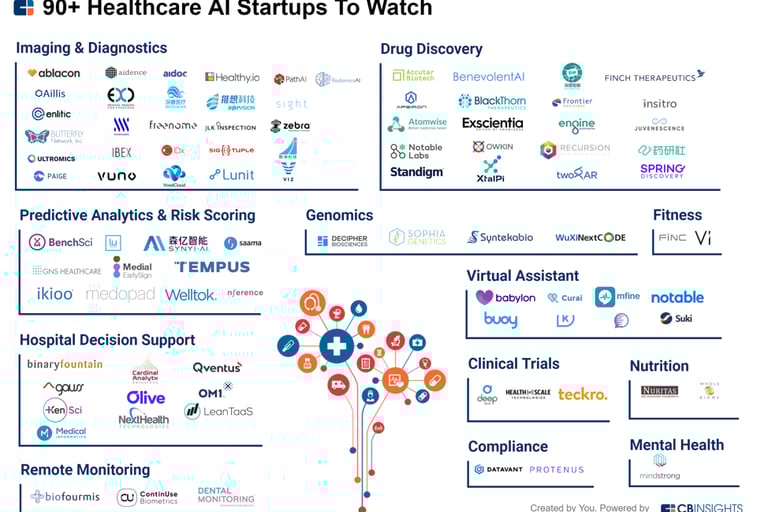
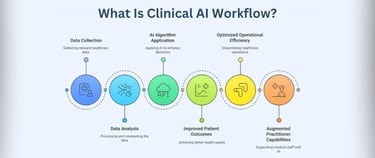
AI is already embedded in healthcare systems through:
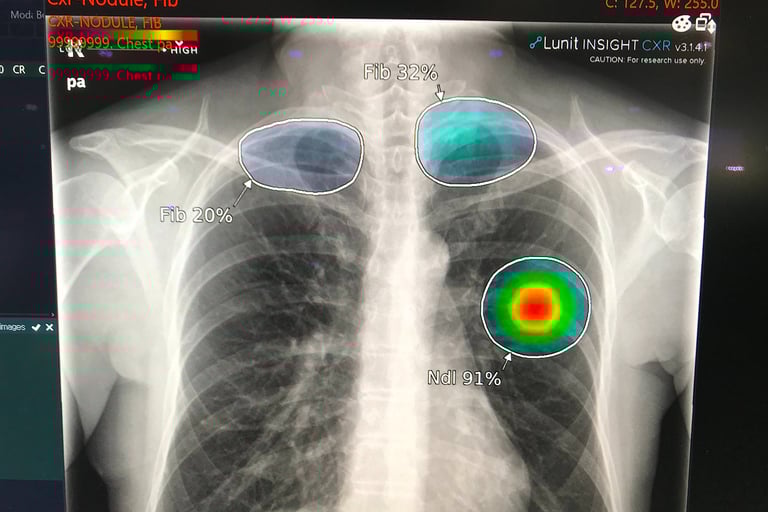
Diagnostic imaging (radiology, pathology)
Clinical decision support systems
Patient triage and symptom analysis
Workflow automation and documentation
Remote monitoring and predictive analytics
The critical shift is this:
AI does not replace jobs first—it replaces tasks...and income is tied to tasks.
FAQ: Can AI Impact Healthcare Professionals?
Yes. AI is already impacting healthcare professionals by automating diagnostic tasks, optimizing workflows, and shifting how medical value is priced—affecting income growth, role stability, and career leverage.
Doctors: From Decision-Makers to Decision-Validators?
For physicians, AI’s impact is uneven—but accelerating.
High-impact areas
Radiology
Pathology
Dermatology
Diagnostic-heavy specialties
AI systems can now:
Detect abnormalities faster
Reduce diagnostic error rates
Handle high-volume routine cases
This does not mean doctors disappear.
It means income growth becomes less linear.
Income risk pattern emerging
Routine diagnostic work faces fee compression
AI-augmented doctors outperform non-AI peers
Income shifts from volume-based to complexity-based
Doctors who rely heavily on repetitive diagnostic tasks may see income plateaus, not immediate losses.
FAQ: Will AI Replace Doctors?
AI is unlikely to replace doctors entirely, but it will replace routine diagnostic tasks—reshaping how doctors earn, specialize, and maintain income stability over time.
Nurses and Caregivers: Replacement or Reinforcement?
A common fear is: Can AI replace a nurse or caregiver? ... The answer is nuanced.
AI performs well at:
Monitoring vitals
Alerting early warning signs
Managing documentation
Scheduling and logistics
But healthcare is not just technical—it is emotional, physical, and contextual.
What changes for nurses
Less time on paperwork
More time on patient interaction
Expanded patient-to-nurse ratios
Greater responsibility per professional
This creates a paradox:
Job demand remains strong
Work intensity increases
Income does not always rise proportionally
Care roles remain essential—but burnout risk increases if financial planning does not adapt.
Income Stability vs Income Predictability (They Are Not the Same)
Many healthcare professionals confuse these two ideas.
Income stability: You are unlikely to lose your job suddenly
Income predictability: You can reliably forecast growth
AI threatens predictability first.
Doctors may still earn well—but growth becomes irregular.
Nurses may stay employed—but shifts, contracts, and workloads fluctuate.
This is exactly why healthcare professionals must view AI not just as a clinical change—but a financial planning variable.
This broader relationship between AI, careers, and money is explored deeply in our pillar guide Future of Work, AI & Money, which maps how professionals across industries should adapt financially.
Graph Insight: How AI Changes Income Curves
Traditional curve
Slow rise → peak → slow decline
AI-influenced curve
Early rise → mid-career flattening → selective spikes for AI-leveraged professionals
Those spikes go to professionals who:
Combine domain expertise with AI tools
Handle complex decision-making
Own patient relationships or systems
How AI Is Changing the Healthcare Industry’s Economic Model
Healthcare is moving from:
Fee-for-service → Outcome-based models
Individual expertise → System efficiency
Local practice → Platform-enabled care
This directly affects income distribution.
Hospitals and systems capture more value.
Individual professionals must actively protect earning power.
FAQ: How Is AI Going to Change the Healthcare Industry?
AI is shifting healthcare toward efficiency-driven, outcome-based models—changing how medical value is measured and how income is distributed across doctors, nurses, and care providers.
Financial Blind Spots Healthcare Professionals Often Miss
Assuming demand equals income growth
Delaying diversified investing due to “stable jobs”
Over-relying on hospital employment benefits
Underestimating mid-career income compression
Ignoring skill relevance in financial planning
These blind spots are not clinical mistakes—they are career-finance mismatches.
What Healthcare Professionals Can Do Now (Practically)
1. Think in income layers
Core clinical income
Skill-based leverage (AI, leadership, specialization)
Asset-based income (investments, ownership)
2. Invest earlier, not later
AI shortens predictable earning windows. Early investing compensates for later uncertainty.
3. Build optionality
Telemedicine exposure
Teaching, consulting, research roles
AI-assisted private practice efficiency
4. Plan for volatility, not just retirement
Emergency funds, insurance, and flexible assets matter more than ever.
The Bigger Picture
Healthcare professionals are not being replaced—but they are being repositioned.
AI changes:
How long peak earning years last
Who captures economic value
How predictable career income remains
Ignoring this shift does not protect income stability.
Understanding and planning for it does.
To see how these healthcare-specific changes fit into a wider cross-industry framework, revisit Future of Work, AI & Money, where we connect AI disruption directly to long-term financial strategy for professionals.
Final Thought
The question is no longer whether AI will impact doctors, nurses, or caregivers.
The real question is:
Will your financial plan evolve as fast as your profession is changing?
Those who answer that early don’t just survive disruption—they stay financially stable through it.




Connect
Questions? Reach out anytime, we're here.
lifeworkwealth@gmail.com
© 2026 Life Work Wealth.
All rights reserved.All content published on this website is for informational and educational purposes only. No part of this website may be reproduced, distributed, or transmitted in any form or by any means without prior written permission, except where permitted by law.